
Pesticide residues
Match sample preparation and measurement for low detection limits.
Application · Food analysis
Automated sample preparation, GC-MS/MS and LC-MS/MS help determine residues and contaminants reproducibly. We match the analytical technique and sample preparation to your food matrix.
Typical tasks
Match sample preparation and measurement for low detection limits.
Unwanted compounds in fish, honey, drinks and other matrices.
Standardize recurring steps and reduce manual influences.
Analytical techniques and sample preparation
GC-MS/MS means gas chromatography with tandem mass spectrometry; LC-MS/MS means liquid chromatography with tandem mass spectrometry. The two techniques complement each other; the choice depends on the target compounds, food matrix and analytical task.
For residues and contaminants amenable to gas chromatography, such as suitable pesticides. The Agilent 7000E combines separation with a triple quadrupole mass spectrometer.
Explore the Agilent 7000E →A complementary technique for residues and contaminants, such as polar pesticides and mycotoxins. We discuss your requirements for sample preparation, chromatographic separation and tandem mass spectrometry.
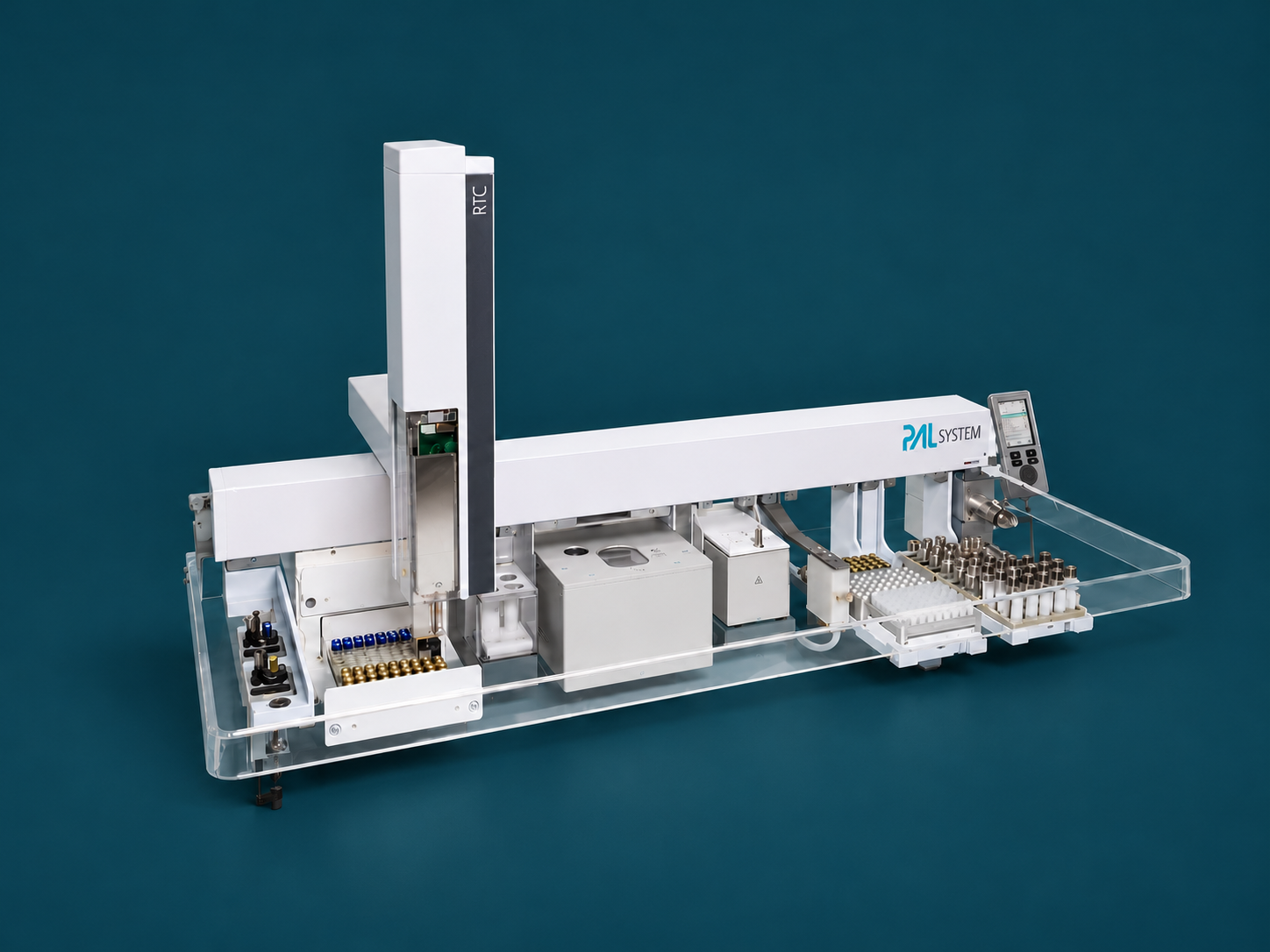
Discuss your LC-MS/MS application →Automated workflows help standardise recurring preparation steps. The appropriate PAL3 configuration and its integration depend on the sample and analytical technique.
Explore PAL systems →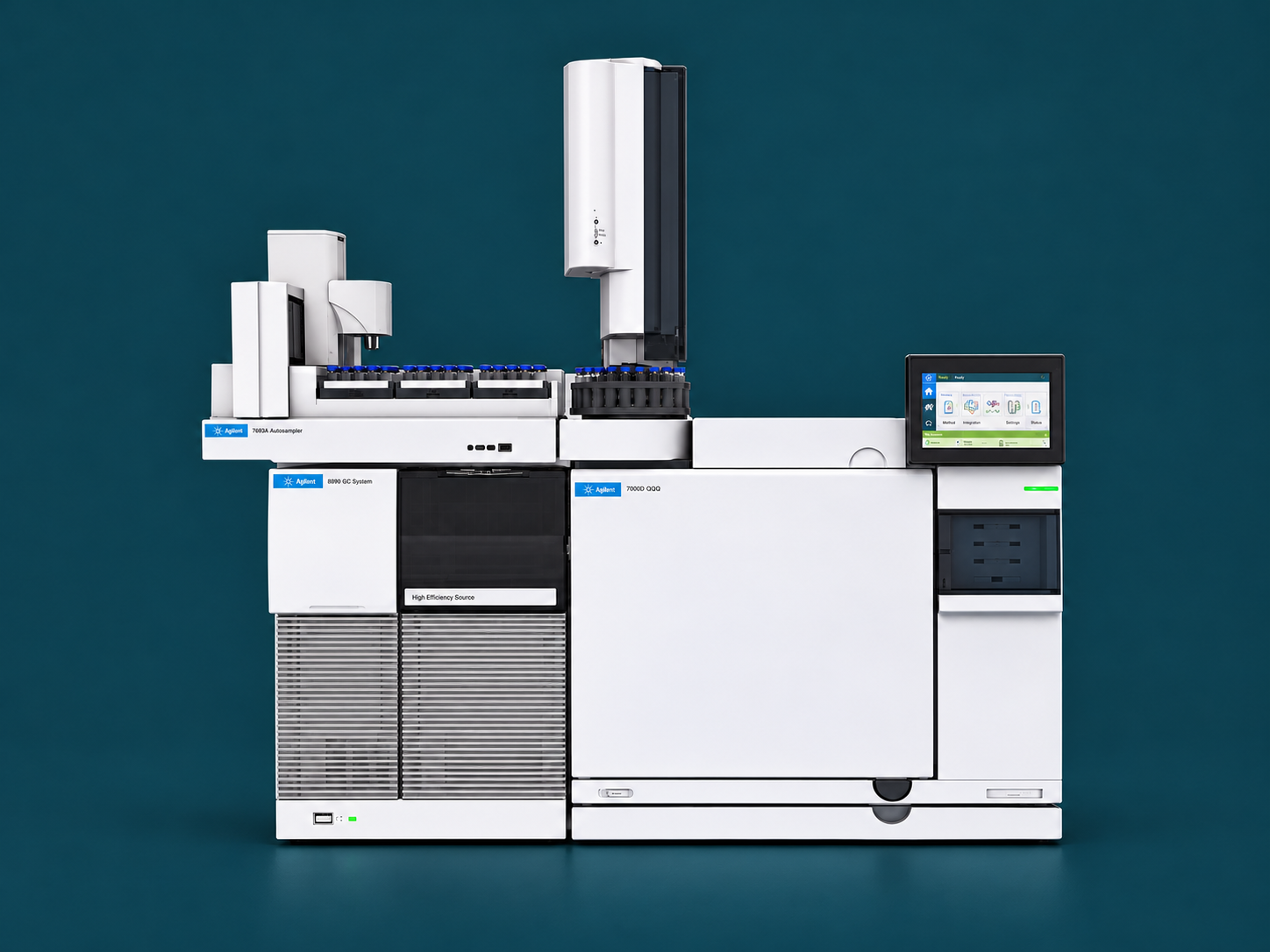 GC/MS
The Agilent 7000E Triple Quadrupole GC/MS is a robust system for targeted routine quantification. Automatic system tuning, diagnostic functions and HydroInert help reduce downtime.
 Laboratory automation
PAL systems automate sample preparation and sample application for gas and liquid chromatography. Choose between PAL RSI, PAL RTC and the DHR system with two heads.
Methodological consultancy services
We help you select sample preparation, sample introduction and the analytical system.
Describe your application →