
GC/MS
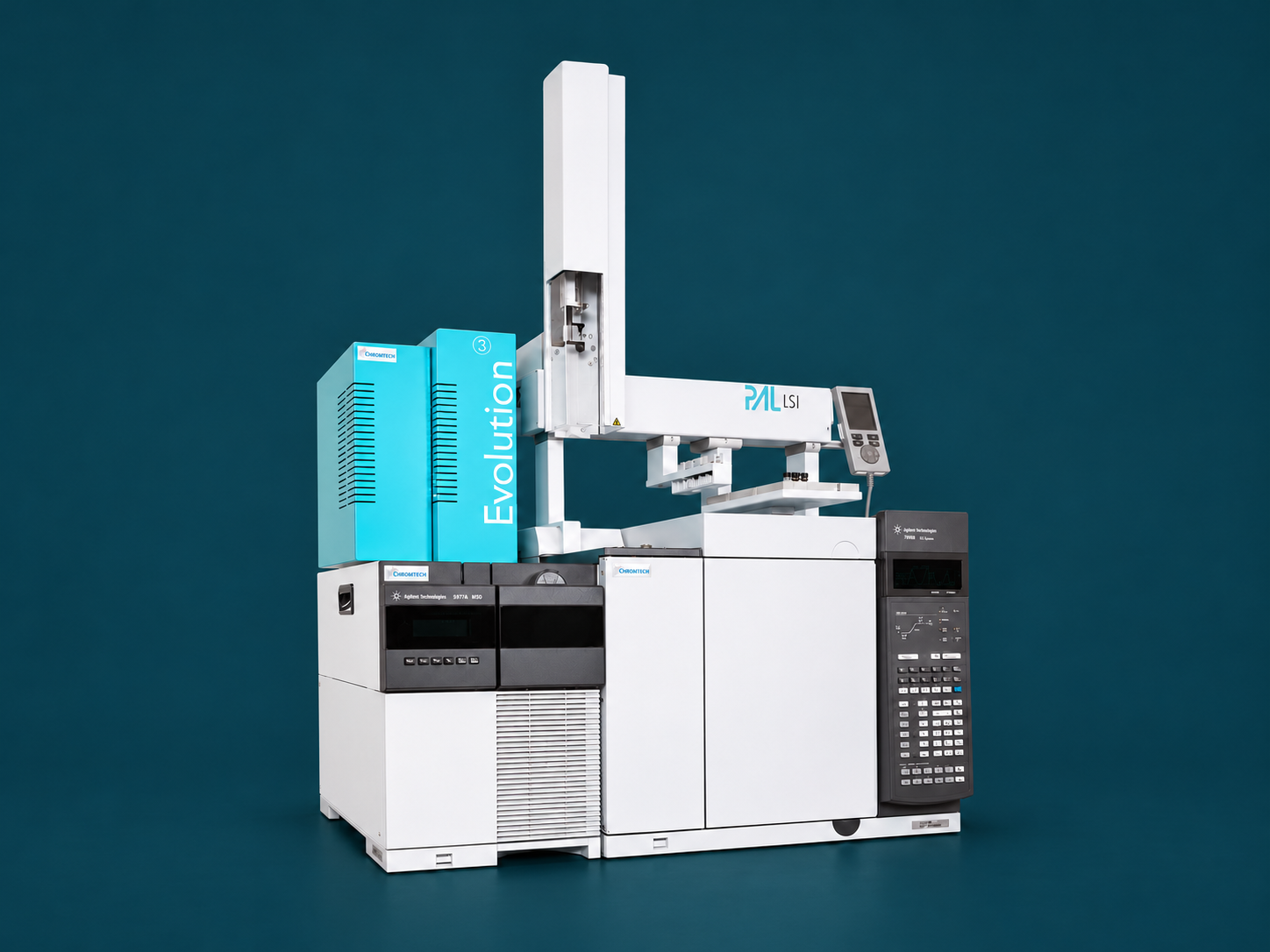
Chromtech Evolution3 GC-MS/MS (QQQ)
Chromtech
Chromtech Evolution3 extends existing Agilent MSD systems to a triple quadrupole GC-MS/MS. MS/MS selection suppresses chemical substrate and improves sensitivity, especially in complex sample matrices.
- Manufacturer
- Chromtech
- Product range
- GC/MS
- Advice
- Direct from Chromtech
Chromtechsystem upgrade
From Agilent MSD to triple quadrupole GC-MS/MS.
Evolution3 extends an existing Agilent MSD with a second mass filter stage and a collision cell. The MS/MS selection masks chemical substrate from complex sample matrices. This increases the sensitivity to scanning and SIM measurements, while existing devices can continue to be used.
- Upgrade of Agilent MSD systems 5977, 5975 and 5973
- Extractor ion source for a high ion yield in trace analysis
- Heated gold quadrupole as first mass filter
- 90° curved IonRail collision cell for reducing chemical noise
- Argon or nitrogen as collision gas; collision energy up to 65 electron volts
- High-precision quadrupole with pre- and post-filters and triple-axis detector
- Automatic system tuning including aerial and water testing
- Integrated Chromtech online support
Typical applications
Terms: GC-MS/MS means gas chromatography with tandem mass spectrometry. QQQ is a triple quadrupole system. MSD means mass-selective detector. MRM is the targeted monitoring of selected ion transitions; SIM is the targeted measurement of selected individual ions.
In practice
Evolution3 at the University of Tübingen.
Yassin Hardi reports on a Chromtech Evolution 3 installation at the University of Tübingen. The GC-MS/MS system combines triple quadrupole analysis with PFC cooling and automated SPDE sample preparation.
A PAL system is responsible for solvent-free dynamic microextraction with SPDE. PFC complements the plant with electrically pre-cooled compressed air for the Agilent MMI injector. The example shows the combination of sample preparation, injector cooling and tandem mass spectrometry.
MMI refers here to the versatile, temperature-programmable Agilent injector; SPDE stands for solid-phase dynamic extraction.
Practical report on LinkedIn →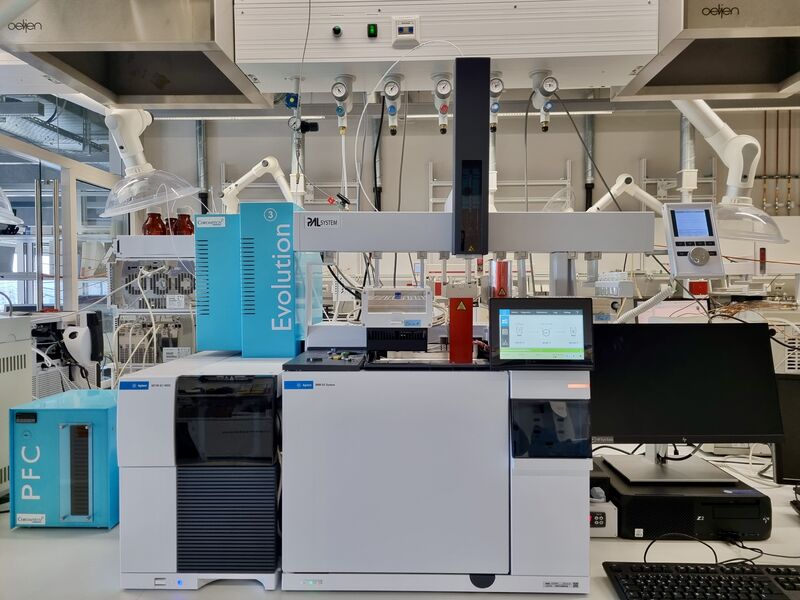
Advice and integration
For the appropriate system configuration.
Whether this product fits your application depends on the sample, method and existing device environment. We clarify the requirements, coordinate the configuration and accompany the integration into your laboratory process.